Kenya: Who Am I?

In America black people constantly wrestle with racial identity. As a young black man I have to consciously resist the stereotypes of dominant society, as they attempt to define who I am. Likewise I have to resist dominant society’s portrayals of who they think I ought to be. While that is easily communicated on paper, actually walking the tight rope of identity is difficult. One of the most fundamental questions asked by all of humanity is “Who am I?”  As Christians we go a step further wanting to know who we are in Christ, and how do we reflect the unique aspect of the Imago Dei that has been imprinted upon us.

I do not want to sound cheesy, but being in Africa, spending time alongside my African brothers and sisters was a spiritual, psychological encounter that gave me an even deeper glimpse into myself. It wasn’t merely being in a context where blacks are the majority of the population, because I already have that in the neighborhood where I live (Philly). However, I think it was the knowledge of the fact that I didn’t have to worry about stereotypes or archetypes from white or black folk, but could comfortably be me without judgement. The racial climate doesn’t easily allow for  much of that in America. We must intentionally seek it out, even when it seems subversive to some who think we ought to all assimilate into one bland and uniformed cultural expression, disregarding the diversity created by God.  I believe that the better we truly know ourselves and who we are, the more capable we will be in ministering to others. Kenya was a timely gift.

Kenya: Four Kids and $25

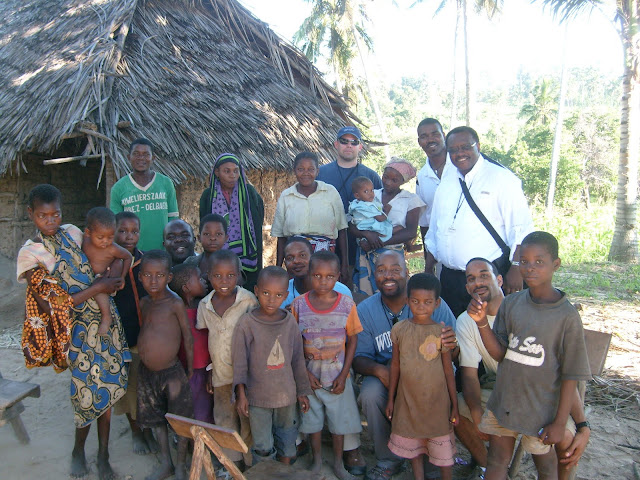
One particular day while in Kenya, a few of us had the privilege of sneaking off the campus with Peter Odanga, the Word of Life Director, and driving up into the village in the hills. He would simply yell “candy” in Swahili as we passed by people’s huts and the kids would come running. We didn’t preach to them, all we did was give them candy, for which they were unbelievably grateful. From what I gathered, Peter does these runs about once a month, and I think it is his way of being a familiar face to those in that village.

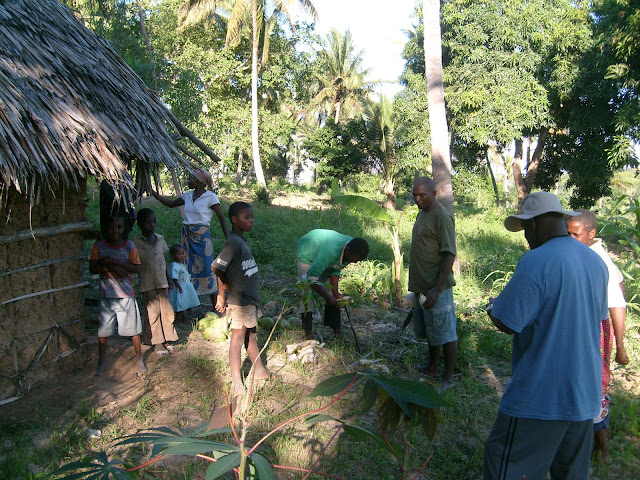
We drove further along and then eventually parked, got out and begin walking through a field of high grass. On the other end of the field we came right into the middle of a families dwelling. Everyone was barefoot, a man was working hard on a piece of furniture I believe, and we were greeted very graciously by the women and children. They brought chairs out for us to sit down and by the time we were sitting the men had come over as well. Peter translated Swahili and English both ways as we spoke back and forth with this family.

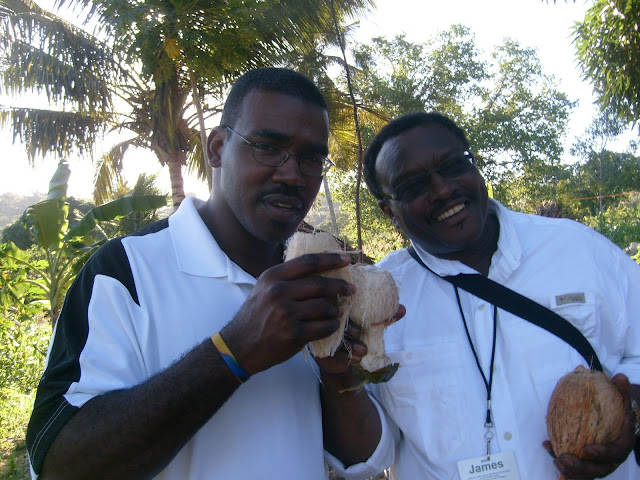
During our discussion we eventually found out that four of the kids there were no longer able to attend school because they could not afford the school fees.  We asked how much it would cost to put them all back in school for the rest of the year. The answer was devastating. $25! The cost to put all four of them back in school again for the year was only $25. I don’t think my heart sank any lower my whole time there as it did at that point. We obviously offered to pay the fee and Peter said that it would be fine to do so. The family was so grateful, but I knew that we were only giving out of our excess, and we did not deserve the appreciation they gave. The head of the family actually climbed up a coconut tree and cut down several coconuts for us, chopped the tops off and served us. This was a humbling experience. It was one of those humbling and formational moments that a person can never forget.

Kenya: London Layover

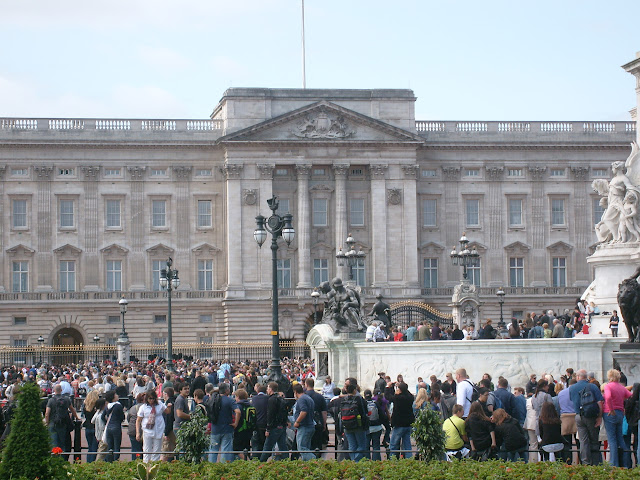
Our trip to Kenya, must really start with our layover in London. We had a 13 hour layover, which gave us the opportunity to get out into the city and see the sights. It was my first and only time in Europe. I probably did not get to take it all in as much as I normally would have, since we were all dreadfully tired by the time we arrived in London, as it was time for bed in U.S. E.T., as we were getting our day started there.

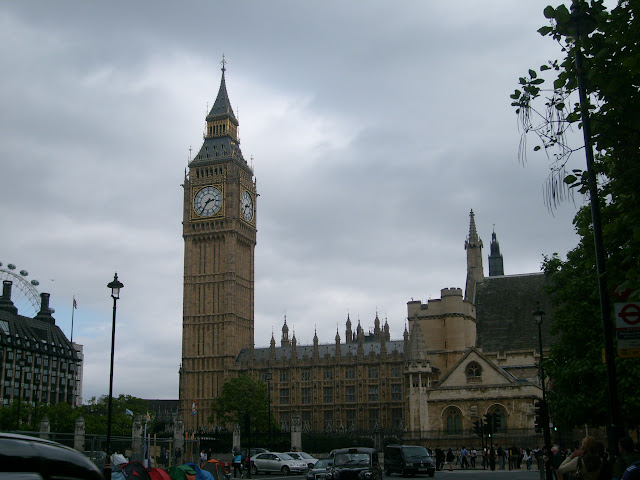
We saw the sights…

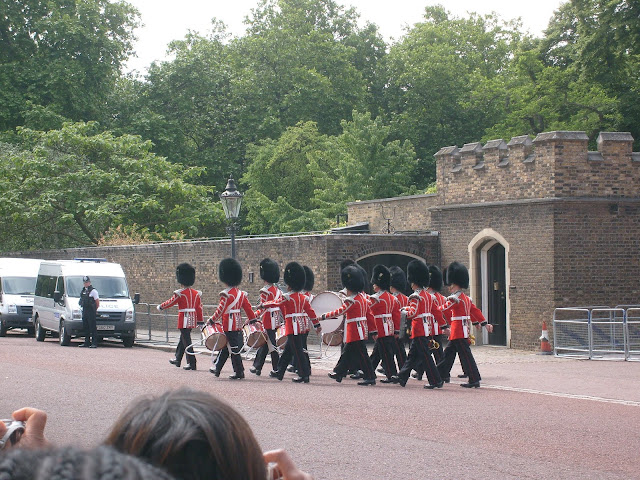
We watched the changing of the guards.

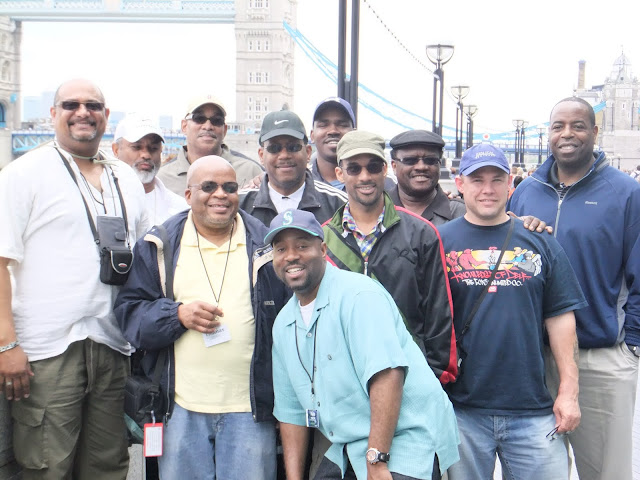
If you look carefully, you will notice that the London bridge is not falling down (sorry, bad joke). Anyhow, we blended as much as a primarily black american group possibly can in London, which is not very well.

We eventually got back to the airport and onto the plane, heading for Kenya. Our final destination was the Mombasa Airport. I can still remember vividly as we drove off of the airport property, and immediately adjacent to the airport were shacks, and by shacks I mean people’s homes. During our hour long drive back to our campus, we saw neverending poverty. Don’t get me wrong, I have seen poverty like that before, but not that much. I can remember in Jamaica seeing the shack towns, but then you would also see some middle class areas as well. Here there seemed to be no middle class at all, and it wouldn’t be until more than half way through the week that we would see actual upper class neigbhorhoods.

As I stared out the window watching black people live in terrible conditions, my mind just kept taking me back to London, where we saw palaces, grandiose churches, and generational wealth. The reason my mind kept going there, is because as a psuedo historian, I know that Kenya was a colony of the British. I would be reminded by my friend John a Kenyan, that they were a British colony up into the 1960’s.  And so it became pretty evident that there was a direct line between the wealth enjoyed in London, and the poverty that was being endured by the Kenyan people.

Little did I know that our London layover would serve as a historical reminder for me, in an in your face way. This theme seemed to come back a few times as we experienced Kenya. We also got to be in Kenya during Madaraka Day, which is the celebration of Independence from the British. The imprints and residue of British colonization were permeated throughout Kenyan culture. While that was obvious for me to see, I am sure that forms of colonization are imprinted on my life as well, to which I am oblivious to. And yet Jesus promises an alternative to the imperial imprint that tries to determine our values and practices, and that is the Kingdom of God. And so all I can say is let us resist some more.

Kenya: My Cohort

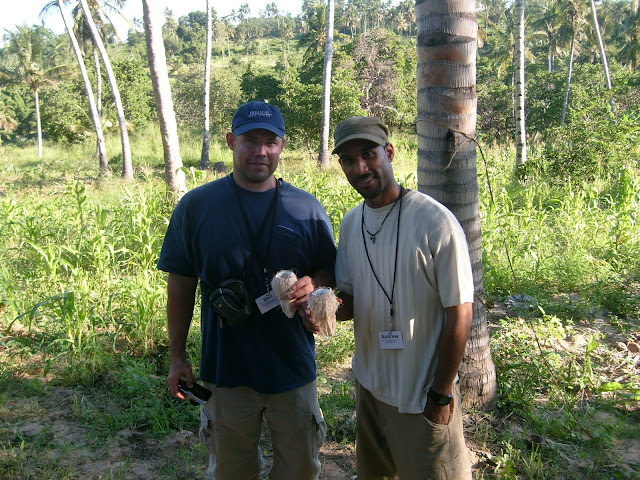
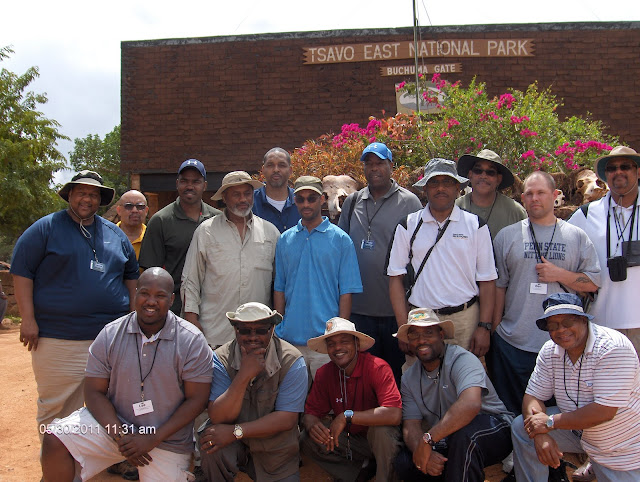
I have been sitting on my Kenya experience for awhile, probably good to share it with you all. Here is my cohort from Biblical Seminary outside Tsavo National Park. I am right in the middle sporting the drifit baby blue shirt and shades.

I love these guys, and there would have been no better team to organize and go to Kenya with than them. Many of us really bonded over the trip, even more than we had previously over the past 3 and a half years.  Everywhere we went in Kenya we were greeted with “Welcome Home!”, which felt good.

Many of us expressed how welcomed we felt while there, in many ways we were more accepted and appreciated there than our home country.  The conflict of what it means to be African and American was something we rapped about after our return. That type of paradox is our history, our legacy. Our ancestors were unfree people in the land of the free. And then we come to Kenya, and felt so welcomed everywhere we went.

Race is something we never avoided talking about in our group, we didn’t always agree on the solution (or even sometimes the problem), but it was all apart of our daily existence and could not be thrown in the closet and ignored. Here in Kenya, race came up more, but even more so colonization. I will have to share more of that in a later post. Stay tuned as I share my experience in Kenya.

Woke Up This Mornin’ With My Mind Stayed On Jesus

I have never been one to tip toe around my opinion of mainstream american religiosity. I have trouble labeling what passes for Christianity in America as such. This is not a statement on whether or not folks are among God’s family (which isn’t really for me to decide), but rather it is an ecclesiological and theological concern which aims to critically consider what qualifies a group of people to be the Church, as well as what is the heart and substance of Christianity.

Unfortunately, American christianity-ism, has inundated itself with very elaborate abstract and systematized theology. The lack of theology being done rooted in specific 21st contexts as well as understood through situating Jesus in the biblical narrative, history, and his Palestinian socio-political context is at the core of our contemporary theological plight. In doing theology with the attempts of building universal systematic principles, we have in essence landed upon vague theological musings that can and often are manipulated regularly.

An example may prove helpful. Jesus challenged his followers to take up their cross and follow him. In America these verses are loved by so-called Christians. In fact, it is not uncommon to hear people talk about the various ways in which they daily take up their own cross and follow Jesus.  The only problem is that they have an abstract understanding of what that means. Taking up the cross of Jesus and following him hardly means to literally consider the actual life, deeds, and teachings of Jesus as they broke into the realities of 1st century life while reflecting and then living out its implications for 21st century American life.  No, instead we get to decide what that means based off of our own personal preferences. (Yes I am critiquing the way Americans read and apply scripture).  It is not strange to hear someone talk about getting up and throwing on a christian tee, listening to their favorite christian artist in the car on the way to work, and reading their bible at the work place as succesfully taking up their cross and following Jesus throughout the day.  While those things are not inherently wrong, they have little to do with taking up one’s cross and follow Jesus’ as was originally intended.  Our abstract and vague theology allows us to creatively reimagine the Christian life in light of our own comforts and unwillingness to have our lives disrupted by the Jesus way.

We have lost sight of Jesus, having replaced him for systematic theology. With our abstract and vague theology, we are able to justify and convince ourselves of just about anything we want. But when we consider Jesus, the Crucified One, who is situated and concrete in real human existence, it will disturb and disrupt our agenda. The realities of Jesus’ sermon on the mount subverts our american ethic, forcing us to wrestle with whether we are serious about following Jesus or not. It is only as we turn our eyes to the Revealed One that our religious justifications are undermined. This can not be done through our tainted imaginations of a nice western Jesus. This demands that we read the Gospels anew, examining the life and teachings of our Lord with utmost seriousness. May we all turn in our clean and pretty systematic theology for Jesus and the cross, which are often not so comfortable and nice, yet open our eyes to seeing the world in truly fresh ways.

Royal Weddings, Birth Certificates, and the Domer Conspiracy

Not much to say about the Royal Wedding… I actually don’t understand the infatuation Americans have with it all. In fact, if I were British I would be upset that my tax money was going towards this psuedo-monarchy celebration rather than to the people struggling economically during their recession. Our obsession with the Royal Wedding exploits some of our own value systems. The fact that we think it is cool rather than sickening shows that we have truly bought into the specious lies of our Empire, mostly commonly known as the American Dream. It is our greedy desire and hope in the possibility that we too could attain ridiculous wealth and luxury that keeps us believing in these falsehoods rather than finding solidarity with those at the bottom and insisting on the creation of a more equitable society.

Picture from indepthafrica.com

On another note, President Obama  released his birth certificate after Donald Trump revitalized an almost dead conspiracy theory that claims that our president isn’t qualified to be so because he was born in Kenya. Who knows if this absurd xenophobia, racism, and fear will be over or not. Probably not since Trump after gloating during his bombast  and news conference immediately started a new conspiracy about Obama’s entry into Harvard.

While questions are being asked, I have some of my own questions. If Donald Trump desires to run for president, I need to know what is going on, on the top of his dome. I think the people have the right to know what his domal situation actually is.  I know I haven’t seen what is being covered up, I bet you haven’t either… do the math! What does he have to hide? Is there a fungus growing under there? Is his headpiece alive? I just don’t understand why he won’t just release the piece and put an end to all this mystery. Please join me in igniting the Domer conspiracy. 75% of Americans want to know what precisely is happening with his hair.

Picture from ismellfeet.com

White Man’s Religion???

Did you know?

During the 4th century A.D., that both the church father of the east and of the west were both African.  Yes, that puts a ruffle in the Islamic claim that Christianity is “the White Man’s Religion”.

In the east, there was Athanasius of Alexandria.  It is noted, that some people even called him “the black dwarf” back then.  Nonetheless, he was the church father of the eastern church, and is noted for valiantly defending the full deity of Christ, even to the point of being temporarily excommunicated.

Simultaneously, Augustine of Hippo was the patriarch over the west and was also from North Africa.  His massive works and development on theology are still studied vigorously to this day. It is his theology that Calvin and Luther would later draw from to arrive at what we call today western theology. While their theology is very different and distinct from Augustine, making some claims and assumptions he never did, it is indisputable that he is the Father of Western Christianity and Theology.

While some could argue that the western tradition has used theology to promote and justify slavery, racism, and apathy towards social justice, those current ideologies were not held by these church fathers.  In fact, at that time the church was much more multi-ethnic, and its face was very diverse.  The amazing thing is that simultaneously both the two primary church fathers were African, yet few are aware of it.   Check it out for yourself.

Barabbas Comparison & Jesus’ Significance

My last post I considered how Western Christianity denigrated Barabbas by taking Barabbas’ ethnicity out of the equation as well as ignoring the socio-political context. This was all compounded by a tradition of sloppy exegesis which distorted the clear depiction of an insurrectionist into a mindless serial killer.

However, I would like to consider why Barabbas is important in the Jesus story. More often than not, Barabbas is the poster child and mascot for those who choose to impose penal substitutionary atonement on every passage, regardless of the biblical context. Why not, Barabbas deserved his crime and Jesus took his place, right? Well, yes and no.

The reality is that Barabbas’ presence in the story is not there primarily to teach us that Jesus is our substitute. Instead, Barabbas is supposed to help us consider Jesus’ significance and mission. Remember that Jesus was Jewish just like Barabbas, and both were born into oppressed bodies under the Roman Empire. Barabbas as noted in my last post was a well known revolutionist who attempted to violently overthrow his occupiers. However, Jesus is actually accused of participating in similar activities when before the Roman authorities. Consider these passages…

Luke 23:2 “We have found this man subverting our nation. He opposes payment of taxes to Caesar and claims to be Messiah, a king.”

Luke 23:5 “But they insisted, “He stirs up the people all over Judea by his teaching. He started in Galilee and has come all the way here.”

In fact, in Matthew 26:55 Jesus himself poses a rhetorical question as he is about to be arrested. He asks “Am I leading a rebellion?” However, the answer is not clear cut. In some ways he is, just not a violent one like the kind Barabbas leads. However his proclamations of a new Kingdom being ushered in certainly imply a certain type of overthrow.

So again we have Barabbas and we have Jesus.  In many ways you could say that they are both revolutionaries, just varying in kind. Matthew 27:15-27 goes a bit further and clues us in on Barabbas’ importance in the Jesus story. Barabbas’ name is Jesus Barabbas. Here in Matthew we see that there is a choice between Jesus Barabbas and Jesus the Messiah. Jesus itself means “the Lord Saves”. So the choice for the people comes down what type of revolution they want and who they believe God is going to use to bring them true liberation. They can try to achieve freedom using the same tools that currently oppress them (violence and manipulation) or Jesus’ methods (sacrifice and service).

Unfortunately they choose Barabbas, thinking that the way of force, violence, and oppression will some how turn into freedom and peace (often promised imperial deceptions).  Yet we all have a choice to make, who will you follow Jesus Barabbas the Violent One or Jesus the Crucified One. Do you expect the violent tools of the empire to suddenly create a new world of  peace and justice? Or are you willing to follow Jesus’ way, the way of the cross, as he flips this world upside-down? How does this impact our role as Christians in America, (the modern Roman Empire in the world)?

Denigrating the Oppressed: A Fresh Look At Barabbas

It seems that holy week would be an appropriate time to reconsider Barabbas, despite colonized depictions that disparage and belie the legacy of this man. I suggest that Barabbas is not the man often depicted in many Western Churches, rather through faithful study of the gospel records a clear alternative image is painted of this New Testament biblical character.

Tell me if this sounds familiar. Barabbas is a psycho criminal that went through the towns ravaging and murdering. In fact, he probably had one cocked eye and foamed at the mouth right? Wrong. Western Christian tradition has stripped Barabbas of his Jewishness and from the larger socio-political context that offers meaning to his presence in the story. To understand Barabbas one must remember his Jewish body (and all others) under the control, rule, and domination of the Roman Empire. Without the proper historical realities, Barabbas’ role in the story is missed (which also means we miss something about Jesus as well).

I have always contended that the Gospels portray Barabbas as a desperate freedom fighter, who much like Nat Turner (or American Revolutionaries) wanted to free himself from imperial and oppressive forces. It becomes clear that he was arrested for participating in a revolutionary movement. Consider the Biblical record…

  • Mark 15:7 “A man called Barabbas was in prison with the insurrectionists who had committed murder in the uprising.”
  • Luke 23:19 & 25 “Barabbas had been thrown into prison for an insurrection in the city and for murder” vs.25 “He released the man who had been thrown into prison for insurrection and murder, the one they asked for, and surrendered Jesus to their will”
  • John 18:40 “They shouted back, “No, not him! Give us Barabbas!” Now Barabbas had taken part in an uprising.”

Clearly Barabbas was arrested for his leadership in an insurrection against the Roman Empire and not because he was a foaming at the mouth serial killer. It is convenient for Western Imperial Christianity to denigrate Barabbas in that way, completely dismissing the conditions that led to such behavior. Not only that, but it strips Jesus from his context as well, for he too is Jewish under the rule of the Roman Empire.  I will explore this more in a follow up post because there is a significant relationship between Barabbas and Jesus that ought not be overlooked. However, for the moment consider taking a fresh look at Barabbas and how his socio-political as well as Jewish significance plays out in the gospel narrative.  Barabbas was in the tradition of the radical Zealots (of which Jesus had such companions in his own entourage).

How have you been taught about Barabbas? Is your understanding of him in sync with the Gospel records? Freestyle with me…